

We feel you, pricing is hard...

It is hard to create, amend and serve pricing to your customers. Because it is hard, it can become a technical concern rather than a business concern. Here be where the dragons lie.

  • Slow delivery speed as pricing is dependent on other technical priorities
  • Increased fallibility as pricing code becomes coupled with other code concerns
  • Brittle test coverage as testing is wrapped in to more generic code testing
  • Fixing issues is slow as developers don't speak the same language as non-developers
  • Developer time is wasted by making frequent ad hoc pricing changes

Swallow allows you to separate the pricing out as its own concern with pricing professionals running the end to end pricing process without developer input. We define this separation of pricing process as pricing operations.

Pricing operations flow
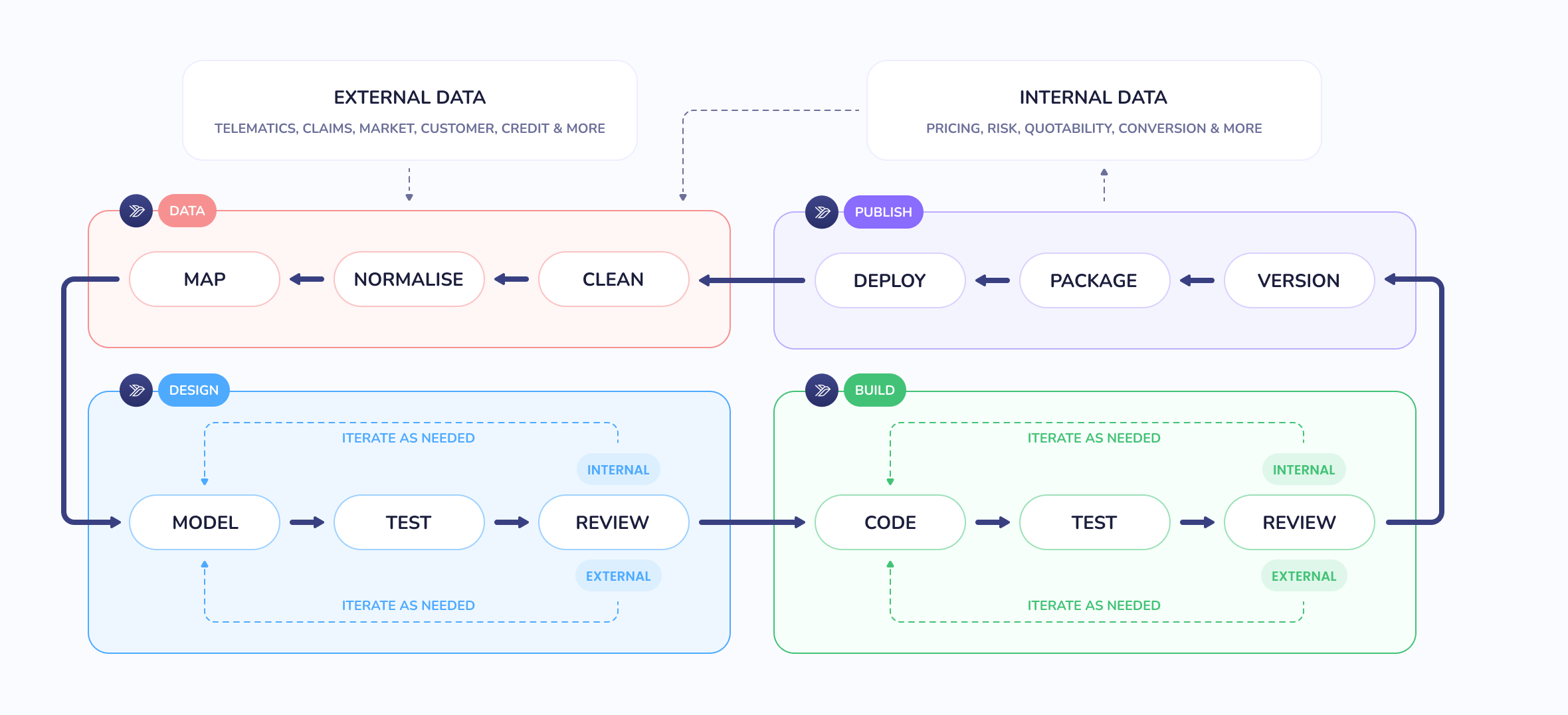
The pricing operations flow

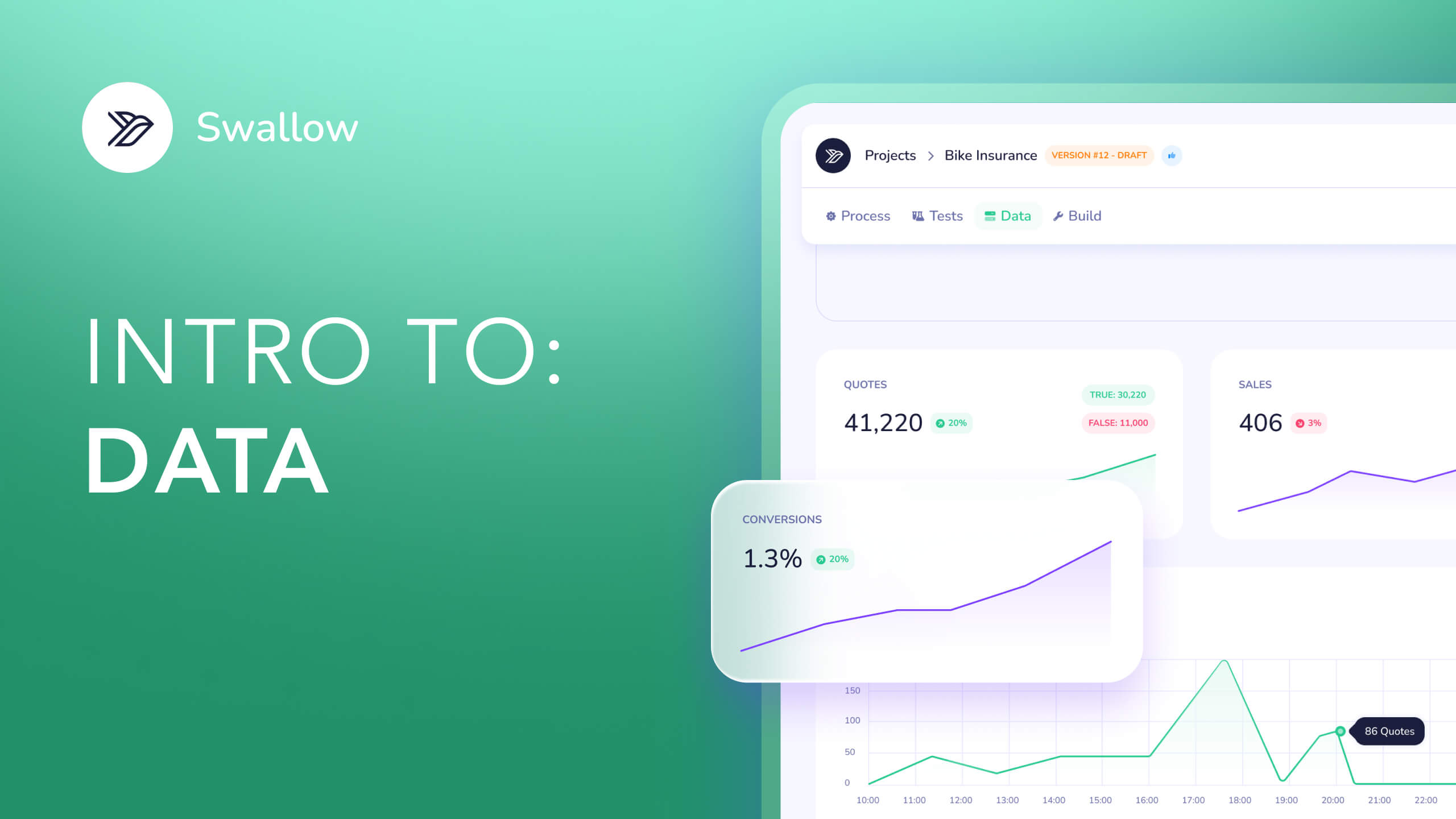
Data

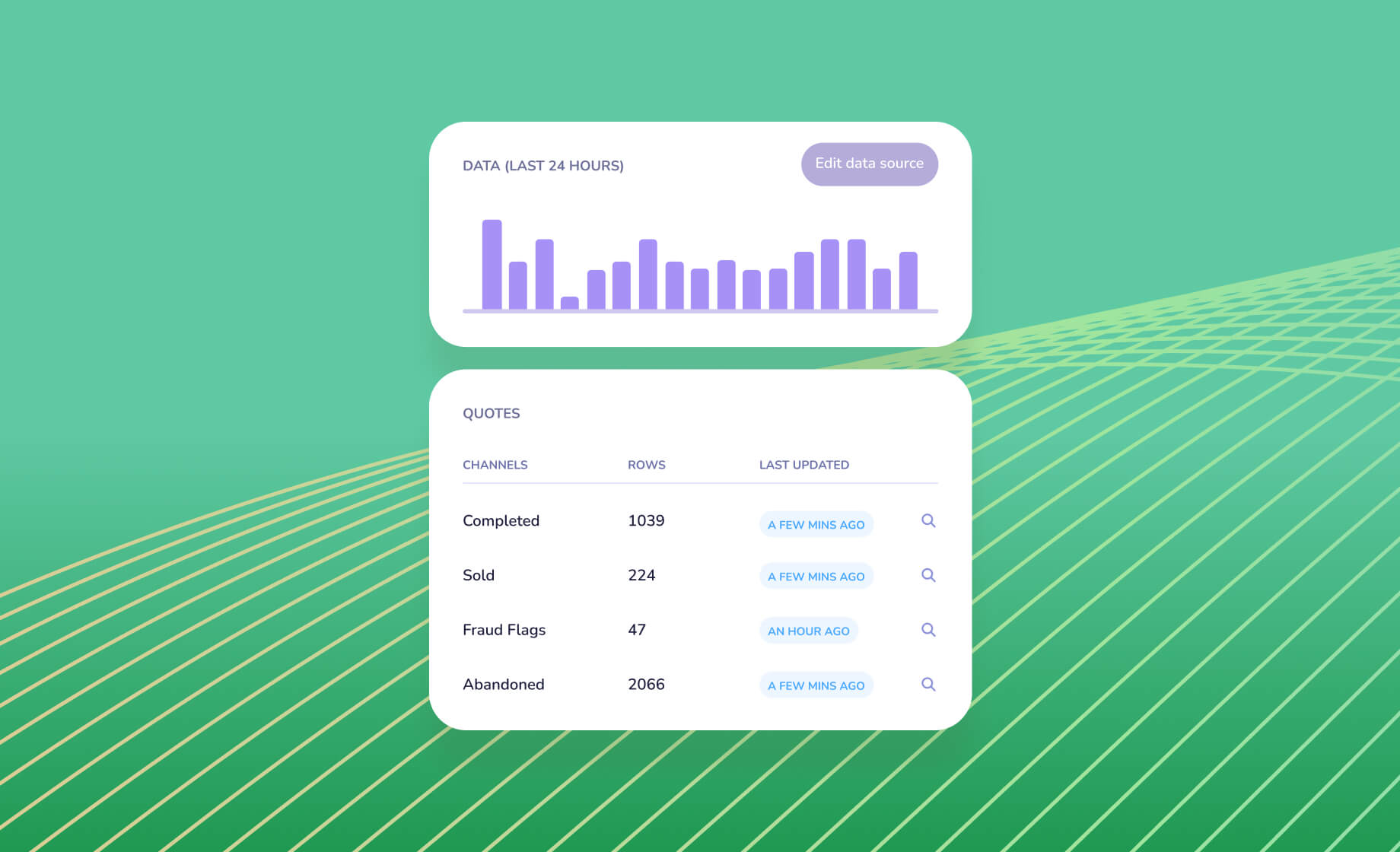
The primary data you need will be from pricing quotes served and products sold. This will give you the internal performance metrics that you can tune to manually or dynamically. This is automatically handled in real-time within Swallow. You have access to all pricing data in a blazing fast queryable architecture than scales to millions of quotes per day. All data is versioned so you know what pricing model was served to which customer.

Data can also be piped from any external source but often needs to be cleaned, sanitised, de-duped and mapped to usable. Swallow provides a simple import architecture that can be API, web hook or plugin driven. An easy-to-learn syntax give you flexibility to build simple or sophisticated ETL (extract, transform, load) capability.

This data is what is used to evolve the design of your pricing model.

Design

Data and experience are used to design changes for your pricing models. Swallow provides drag and drop components that include enrichments (external APIs, large data set mapping), rules (exclusion, excess, endorsements, referrals), pricing factors (trained ML models, pricing tables, discounts, excesses, deposits, fees) and calculations (price, taxes, commissions). These components can be combined in sequence to make flows of increasing complexity.

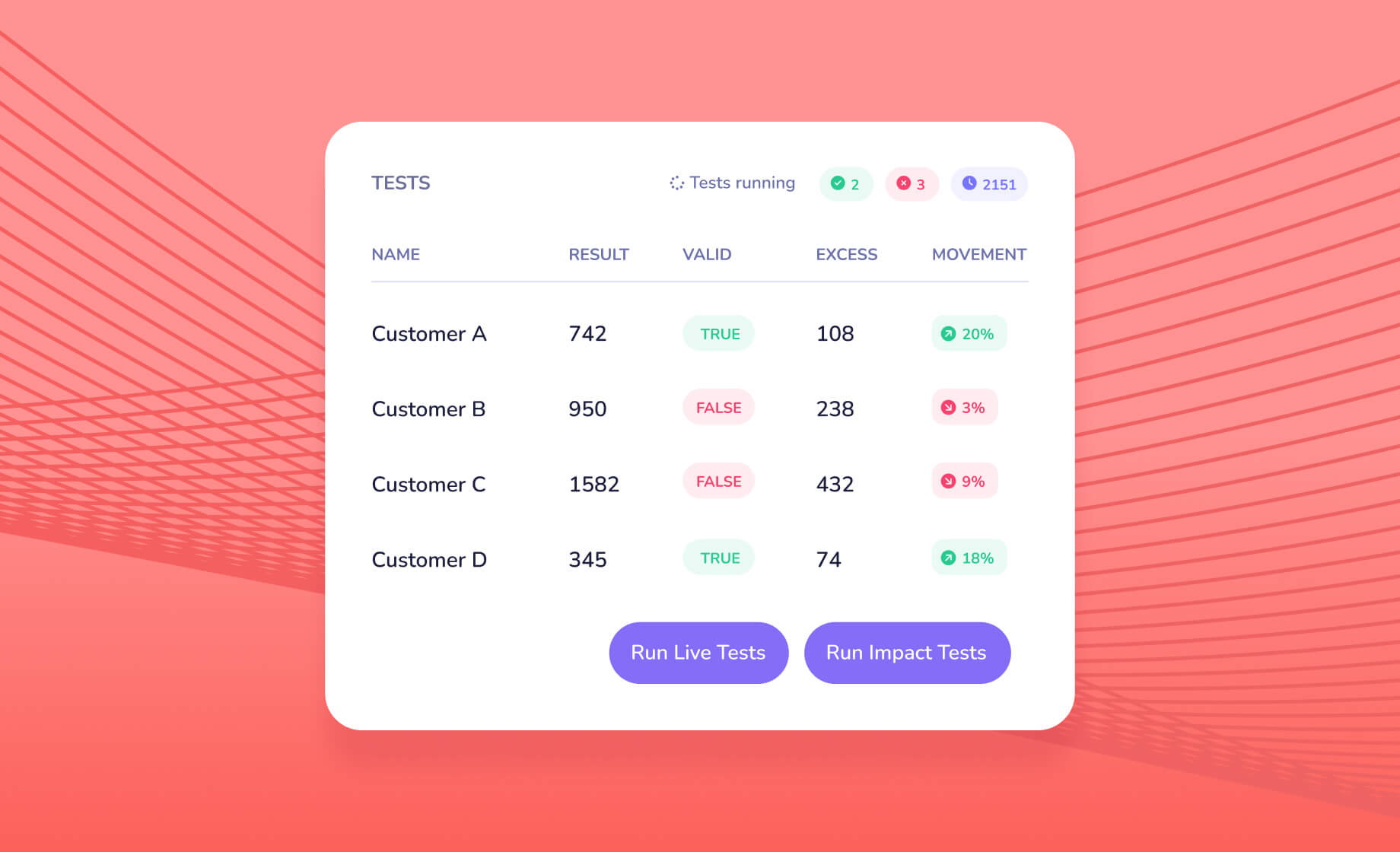
Each change will impact your customers. You can define 100s of customer personas that you can run impact testing against as you design you model changes. These tests give you confidence of what the pricing implication will be for existing and future customers.

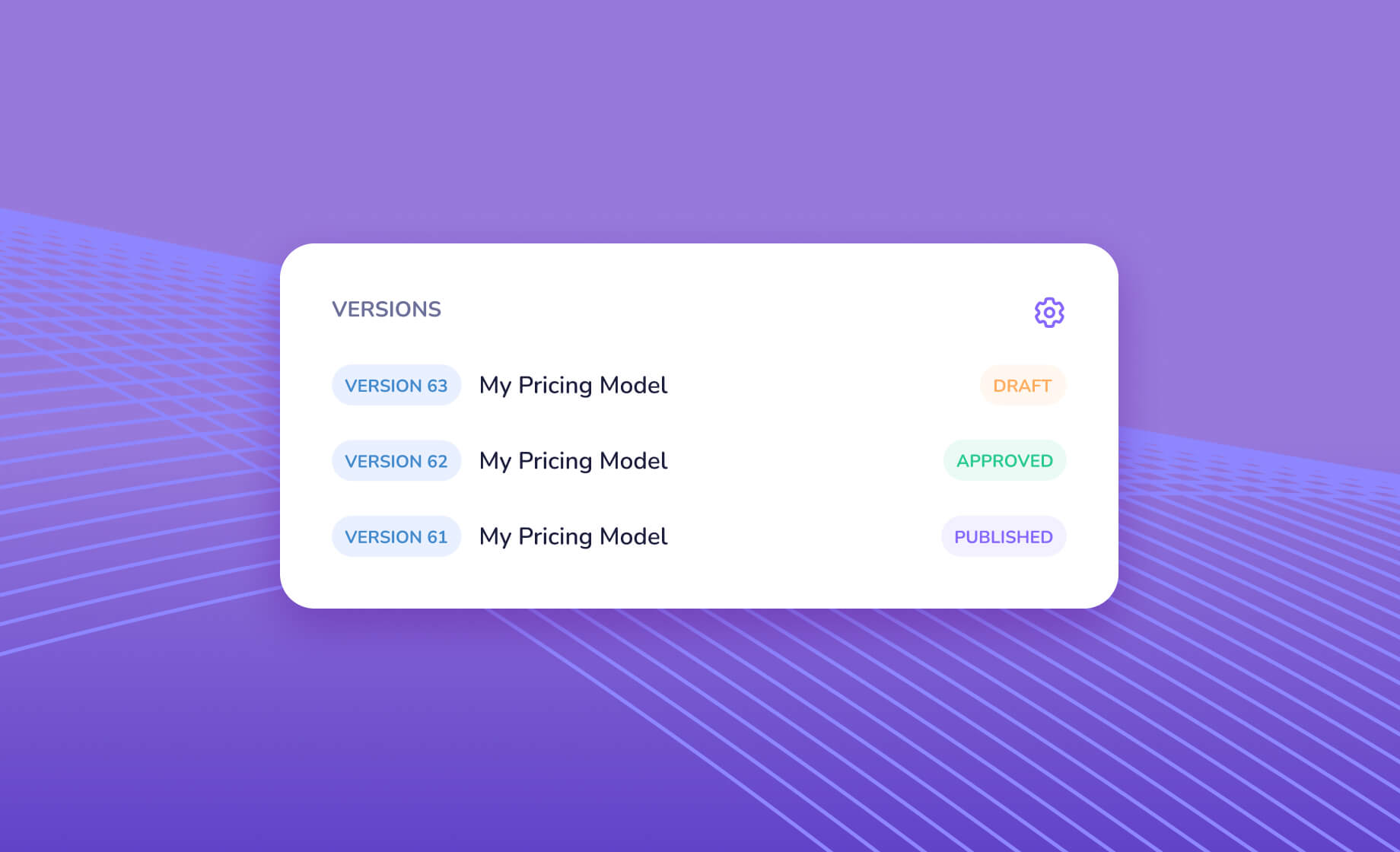
Finally, the proposed pricing change can be shared for review and approval by key stakeholders. You can give visibility of pricing changes to all your team before implementation.

Build

The approved pricing changes design are automatically turned in to code as you design. An API (for developers to integrate with) and trial form (to try like a customer) are automatically generated as you design. There is no lag between design and build. There are no communication issues between the pricing team and developers.

Publish

At a click of a button , the pricing change will be packaged, versioned and deployed to globally accessible cloud infrastructure. The new pricing model will be served on a fixed endpoint at high frequency, low latency and scaled to millions of pricing quotes per day.

Published quote data then feeds back in to your data step.

The Swallow workbench

Swallow is a suite of no-code tools for pricing professionals to manage the pricing operations which increases the speed and confidence of delivering pricing changes for better growth and profitability for your business.

Swallow has 4 main products for managing your pricing operations. These are process, testing, data and publish.

Continue reading

From filing to rater: building pricing models from US rate filings

What sits inside a US rate filing, how to rebuild it as a working, tested rating model, where AI speeds things up and which gaps to expect.

Swallow compared: enterprise pricing platforms, core system raters and AI newcomers

Where Swallow sits against established insurance pricing and rating platforms and newer AI-led options, on model format, testing, approvals, AI and distribution.

Building pricing models with Claude and ChatGPT: what works, what doesn't

A practical look at building insurance pricing models with Claude and ChatGPT over MCP: where AI clients help, where they trip up and how to keep people in charge.

AI in insurance pricing: closing the gap between rating guide and live model

Pricing design is rarely the bottleneck. Implementation is. How AI shortens the path from signed-off rating guide to a tested, live pricing model.

Fair value under Consumer Duty: the evidence your pricing should leave behind

What the FCA's Consumer Duty and pricing rules ask of insurance pricing teams, and the records that make fair value something you can show, not just claim.

When the customer is an AI agent: getting your pricing ready

AI assistants are starting to shop for insurance on people's behalf. Here's what your rating engine has to give them to quote your products properly.

How to connect the Swallow MCP server to Claude

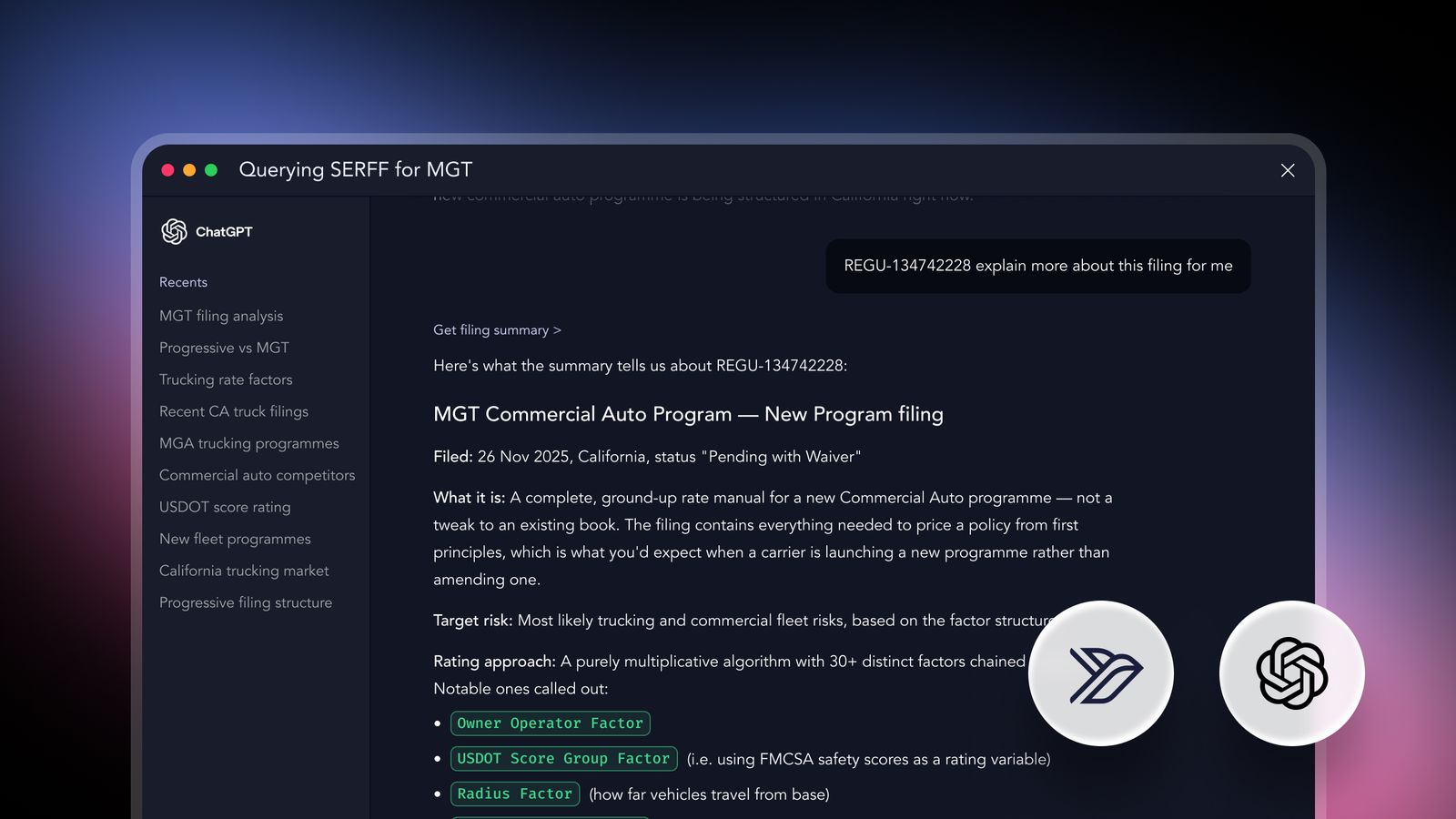
Connect Claude to your Swallow pricing infrastructure using MCP to analyse models, inspect rating logic and interact with your tools using natural language

Regression testing insurance pricing: why every rate change needs a test suite

How to build a regression test suite for an insurance pricing model, from worked examples and band edges to declines, refers and real quotes.

A safer rate change: eight steps from analysis to monitoring

A repeatable process for insurance rate changes, from the change statement and draft version to tests, approval, release and monitoring, and where AI helps.

Readable by design: pricing models people can check, even when AI writes them

When AI drafts pricing logic, review becomes the slow step. Why a declarative, readable model format is faster to check and audit than generated code.

Moving off a spreadsheet rater without changing a single price

How to tell when an Excel rater has outgrown its job, what keeping it really costs, and a migration plan that uses the spreadsheet's own answers as the tests.

Starting an MGA: from rating guide to first live quote

A practical route for a new MGA's first product: agreeing terms with capacity, building and testing the model, picking channels and watching rates after launch.

AI and insurance distribution: one price, every channel

Aggregators, embedded journeys, chat, voice and AI agents all need the same thing from pricing. Why one explainable rating engine should sit behind them all.

AI in regulated industries: why explainability has to come first

Insurers can get real gains from AI and still meet what the FCA, the EU and US regulators expect, provided every decision can be explained, reproduced and signed off.

Swallow vs Earnix

Swallow and Earnix Price-It compared for insurance pricing and rating: who each is for, how models are built, tested and released, how AI is used, and distribution.

Swallow vs Guidewire PricingCenter

Swallow and Guidewire PricingCenter compared: who each suits, how each relates to PolicyCenter, how models are built, tested and released, AI and distribution.

Swallow vs Duck Creek Rating

Swallow and Duck Creek Rating compared: who each suits, suite and standalone use, how rates are built, tested and released, deployment, AI and distribution.

Swallow vs Oracle Insbridge

Swallow and Oracle Insurance Insbridge Enterprise Rating compared: architecture, how rates are built and changed, testing, integration, AI, and how to migrate.

Swallow vs Akur8 Deploy

Swallow and Akur8 Deploy compared: where each rating engine fits, how rates reach production, testing and sign-off, how AI is used and when to pick which.

Swallow vs hyperexponential (hx Renew)

Swallow and hyperexponential's hx Renew compared: who each suits, Python models versus readable JSON, testing and approvals, AI and the Guidewire deal.

Swallow vs WTW Radar

Swallow and WTW Radar compared for pricing and real-time rating: who each suits, how models are built and changed, testing and approvals, and AI features.

Swallow vs building a rating engine in house

Build or buy? A fair look at writing your own insurance rating engine versus using Swallow: testing, versioning, audit, serving at volume and rate changes.

How to connect the Swallow MCP server to ChatGPT

Connect ChatGPT to your Swallow pricing infrastructure using MCP to analyse models, inspect rating logic and interact with your tools using natural language

Swallow Data: Live insight into your pricing performance

See how Swallow’s Data area gives you real-time visibility over quotes, performance, and customer behaviour across your entire pricing model

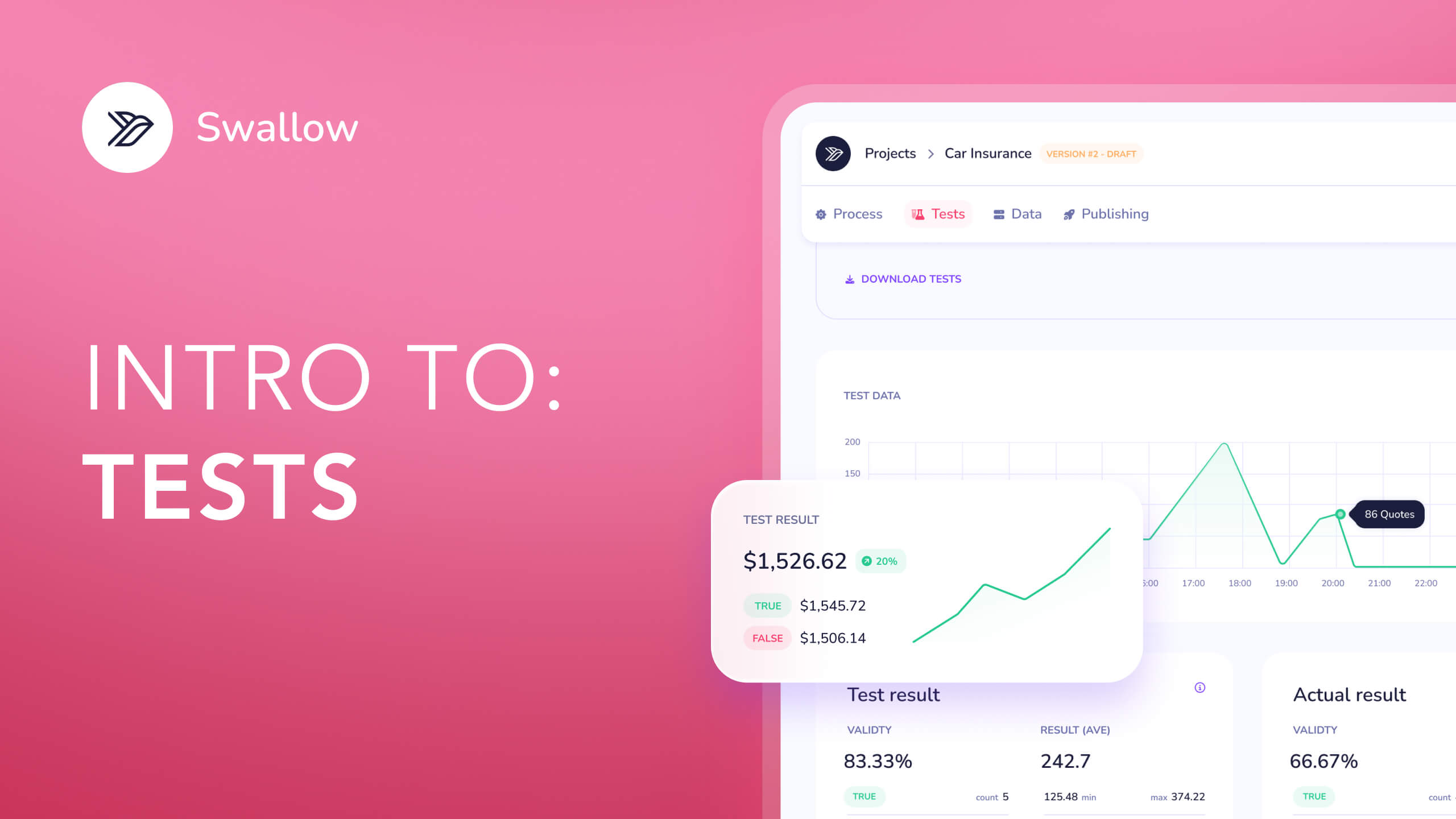
Swallow Tests: Validate your pricing with real-world scenarios

See how Swallow’s Tests area lets you simulate quotes, inspect calculations, and perfect your pricing model before publishing

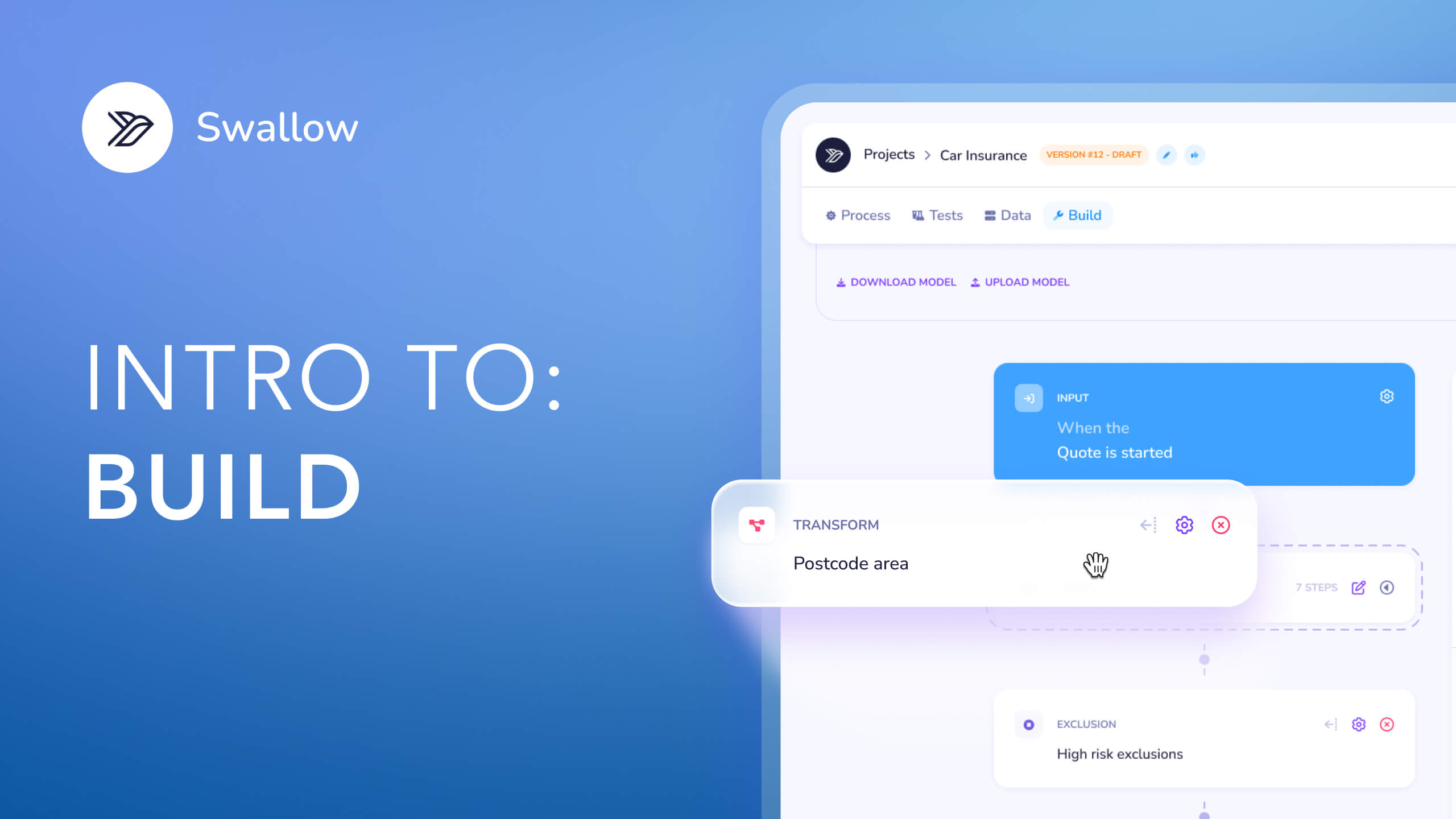
Swallow Build: Bring your pricing model to life

A quick look at how Swallow’s Build area lets you edit, test, and publish pricing models with complete control and instant feedback

Swallow Overview: Core features at a glance

See how the AI actuary inside Swallow turns a simple prompt into a fully tested and deployable insurance pricing model for electric vehicles in just a few clicks

Why Modern Insurers Are Moving to AI-Powered Enterprise Pricing Engines

A look at how AI is transforming insurance pricing, from spreadsheet-based models to enterprise-grade rating engines built for speed, consistency, and control

Swallow / MGT

How MGT use Swallow to power AI-driven pricing, accelerate model updates and support fast, reliable commercial insurance quoting.

AI Agent for Insurance Products

Sam talks through our new AI Agent for Insurance products. Get a new Insurance product built and live within a couple of minutes.

Swallow / Ouch!

How Ouch! used Swallow to launch digital takaful products faster, with transparent pricing, audit readiness and seamless model updates.

Pricing Pain Point #4 - Slow deployment

Whilst the modelling process is where pricing strategy begins, getting changes in front of customers is where the rubber hits the road and new pricing is tested with real customers. Moving quickly to make changes to live pricing offers pricing teams an opportunity to respond to the market, test and iterate, and roll out new products.

Pricing Pain Point #3 - Testing concerns

With pricing critical to growth and profitability, businesses must understand the impact of any price changes, as well as ensure what goes live to customers is identical to that modelled. With pricing driven by complex financial models, this is particularly true - a percentage point error in the code deployed could easily lead to a significant financial impact.

Swallow / Open

How Open used Swallow to launch embedded insurance in the UK faster, with flexible pricing, rapid updates and lower operational cost.

Pricing Pain Point #2 - Lengthy process

In any fast moving business, having a clear record of decisions, changes and their impacts is key to operating efficiently and successfully. For regulated industries, a clear governance process is a requirement and critical to ensuring compliance with local regulations.

Pricing Pain Point #1 - Data issues

Underlying all pricing strategy is data, whether it be on the market and competition or a company’s own quote, sales and cost data. Collecting this data and using it to inform future pricing decisions is one of a pricing team’s key objectives.

Swallow / Rivr

How Rivr uses Swallow to deliver pricing models faster, with better governance, smoother client handovers and one-click deployment.

What we've learned about pricing

Over the past few months, we've talked to over 100 pricing and technology professionals from a range of industries. From our conversations, many pricing pain points have emerged, helping us to better understand the challenges businesses face and inform the direction of our platform.

Why I created Swallow

Financial pricing models (think insurance, credit, mortgages, financing, leasing, memberships) have, and continue to be, designed in spreadsheets and published through in-house custom code or legacy enterprise software. Pricing changes can take weeks instead of hours.