


Swallow vs building a rating engine in house

Writing your own rating engine can be the right call if you have a strong engineering team, a handful of simple products and a genuine need to own every line of code. For most insurers and MGAs, a platform such as Swallow costs less and gets there sooner, because the rater is the small part of the job. The large part is showing that it prices correctly, recording every change, keeping it up and quick under load, and keeping it right as rates move. AI writing the first draft doesn't shrink any of that.

Writing the rater is now the easy bit

A general AI tool can turn a rating guide into a working rater in an afternoon. Hand Claude or ChatGPT the guide and you'll get back a Python function that reads the inputs, looks up the factors and returns a premium. For a simple product, it may well be right first time.

That shifts the build or buy question. Not long ago, most of the cost of building in house was writing the rating logic. Now most of the cost sits around it: testing, version control, approvals, an audit trail, staying fast at aggregator peaks, and maintaining it for as long as the product is on sale. Those are the parts this post is about.

At a glance

Swallow Build in house
Getting started Talk to us Developer time from the first day
First version AI draft from a description and spreadsheet, a US filing, or built on the canvas Quick with AI coding tools
Model format Readable JSON of ordered steps that underwriters can review Program code that needs an engineer to review
Testing Tests on every version, expected against actual Whatever you build and keep up
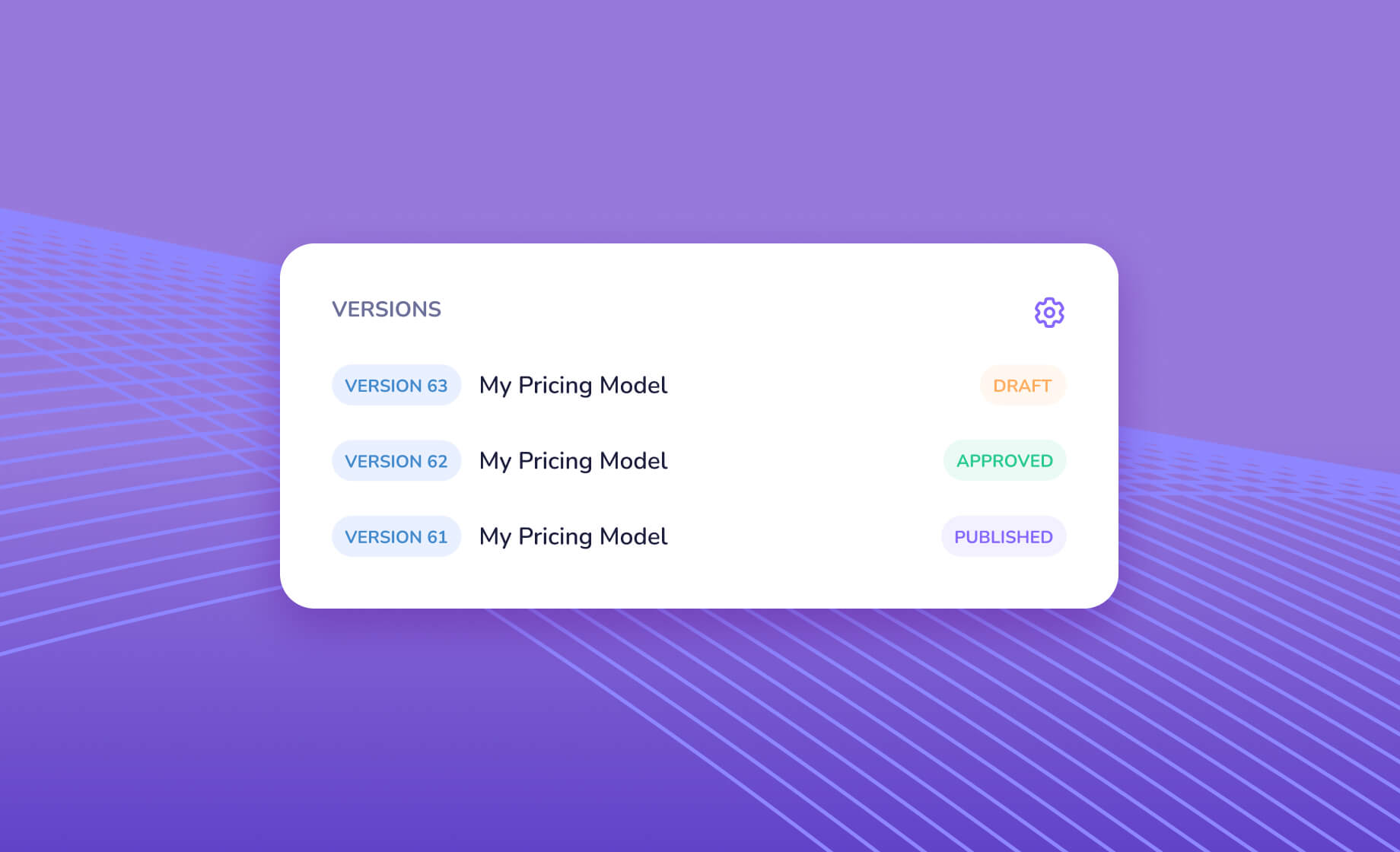
Versions and approvals Draft, approved, published; one draft at a time; approvals by role Whatever you build
Audit trail Every quote records its version, with a debug trace on request Whatever you build
Serving Real-time REST API, embedded forms, voice and chat; built to scale to millions of quotes a day You host, scale and monitor it
AI clients MCP server for Claude, ChatGPT and Cursor; agents draft and test, people publish Your AI tools edit your code directly
Rate changes New draft, run the tests, compare, approve, publish A code change and a release
Ongoing cost Talk to us Engineering, hosting and support for the life of the product
Control Self-hosted enterprise offering Total

The work that comes after the rater

Tests

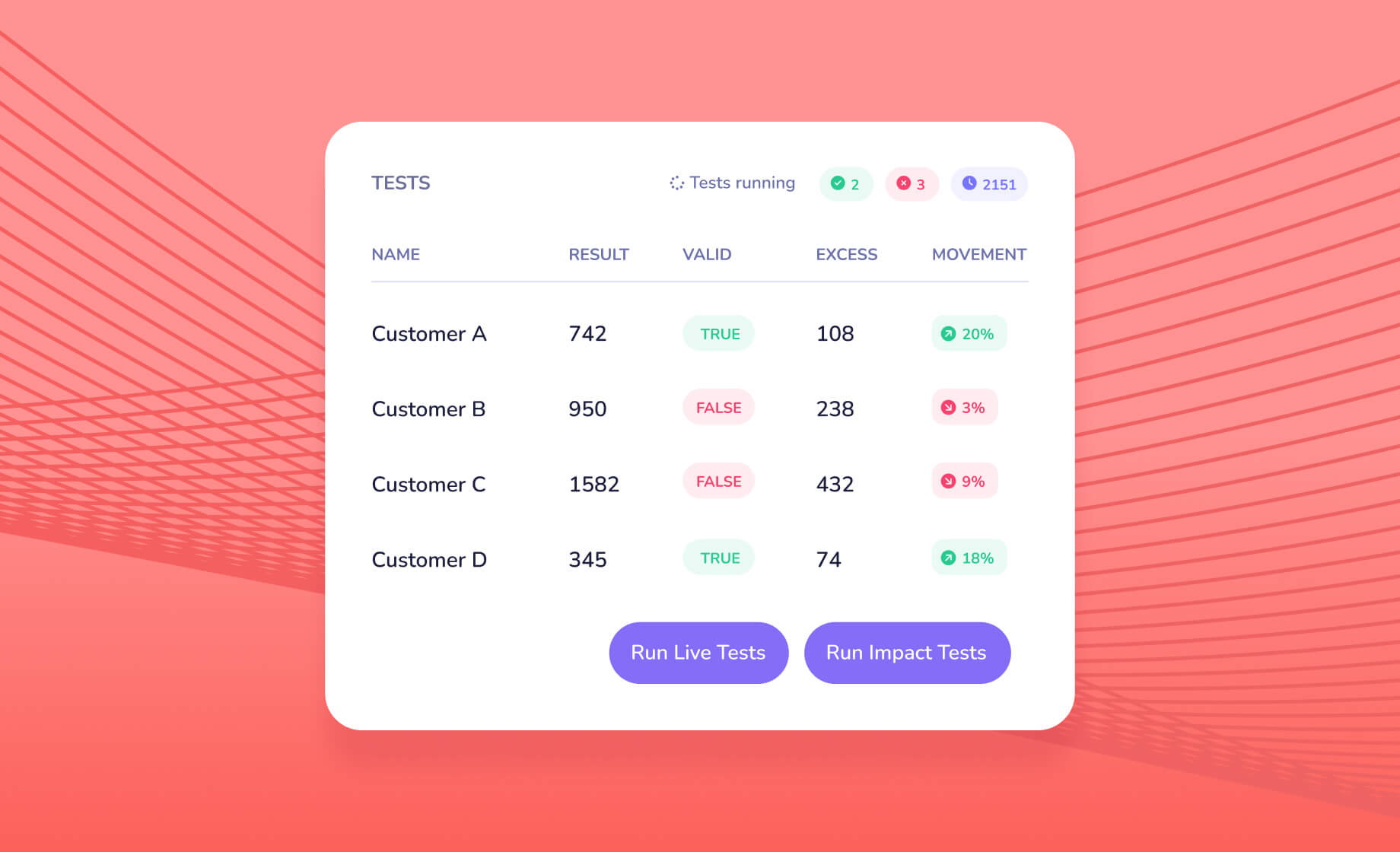
A rater that's right today can be wrong after the next edit. You need a bank of test quotes, each a full set of inputs with the answer you expect, covering the actuary's worked examples, both sides of every band edge and each decline and refer rule. It has to run on every change and someone has to keep it current. In Swallow, tests live on each version of the model. Add them one at a time, upload a CSV, or have AI generate a starting set, and the dashboard shows expected and actual results side by side. Every rate change needs a test suite goes into why.

Versions and sign-off

For a regulated product you need to show who changed a rate, when, why and who approved it. Building that yourself means draft and live versions, an approval step and a history nobody can rewrite. Git covers part of it for code, but underwriters and pricing analysts rarely live in Git. In Swallow every version goes from draft to approved to published in the dashboard, your team's roles decide who can approve, and every step is logged with who did it and when.

An answer for every quote

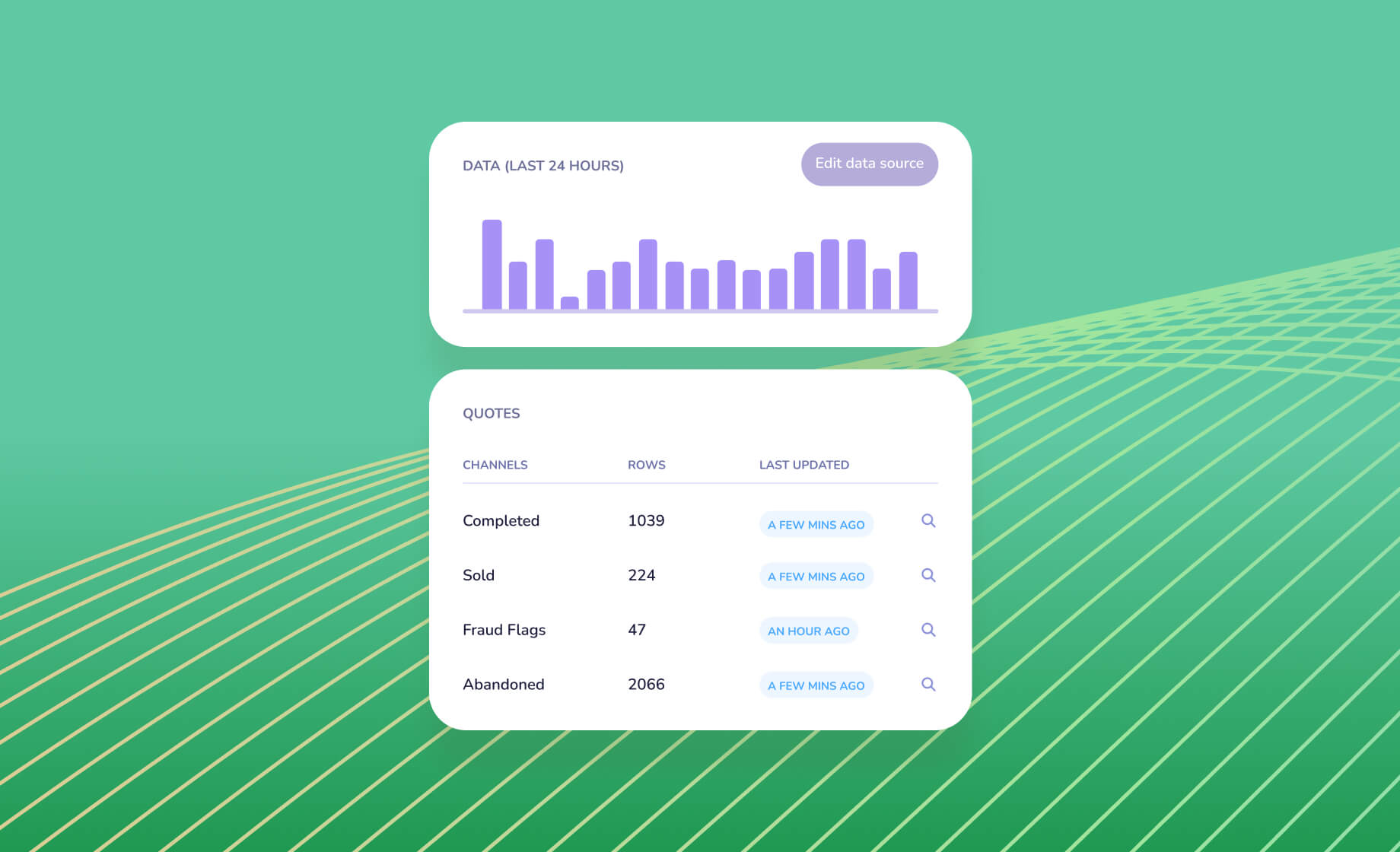
When a customer, auditor or regulator asks why a quote came out at a given price, you need the version that priced it and how each factor was applied. Every Swallow quote records its version, and the API can even find the version that was live on a given date. Ask for a debug trace and you get every input, lookup, formula and rule the engine worked through.

Staying up under load

A function on a laptop isn't a quoting service. A live product needs an API that's fast and available at peak, and on a comparison site peaks can be sharp. That's hosting, scaling, load testing, monitoring and someone on call. Swallow's engine is built to scale to millions of quotes a day, and the same model serves the API, embedded forms and voice and chat. Our post on AI for insurance distribution covers what each channel asks of a rating engine.

Keeping rates current

Rates move with claims inflation, new territories, tax changes and the competition. Each move has to be built, tested, approved and released. If every one needs a developer, pricing queues behind engineering, and over the life of a product the upkeep can cost more than the first build. In Swallow a rate change is a short loop: copy the live model into a draft, make the change, run the tests, compare, then approve and publish. The rate change process sets it out step by step.

Being able to read it

AI-written code can be correct and still hard for an underwriter or actuary to check. A Swallow model is a file of named steps (lookups, calculations, transforms, exclusions, refers) that people and AI clients can both read, so a review doesn't depend on whoever wrote the code. There's more on that in human-readable pricing models.

AI works on both routes

AI helps whichever way you go. What changes is what it's working against. In house, an AI tool edits your code, and your own tests and processes decide whether the change is safe. With Swallow, Claude, ChatGPT or Cursor connect to the MCP server, load the rules, start from an example model, validate it and run its tests, without saving anything. The agent hands over the JSON, and a person uploads it to a draft, approves it and publishes it in the dashboard. No MCP tool can create, edit or publish a project.

Build it yourself if

  • You have a strong engineering team with room to own the engine for years, not just to write it.
  • You have a few simple products and rates rarely change.
  • Rating is wound tightly into proprietary systems and you need full control of the code.
  • You're ready to build testing, versioning, approvals, audit and serving as well.

Choose Swallow if

  • You'd rather spend engineering time on your product and distribution than on rating infrastructure.
  • You need testing, version control, approvals and an audit trail from the first release.
  • You quote through APIs, aggregators, embedded forms or chat and they have to stay up at peak.
  • Your pricing team wants to change rates without waiting for a release.

If you'd rather not build the model yourself, send us your rating guide, spreadsheet or filing and we'll talk you through getting it live on Swallow.

A route in between

A rater you've already built isn't wasted. Its answers make the best test suite you could ask for. Push a large set of quotes through it, keep the results and use them to show a Swallow model prices the same, as described in moving off a spreadsheet rater.

Next steps

Walk through a model being built and tested on the developer page, see how quotes are priced through the API, or talk to us. For more on general AI tools and pricing, read using Claude and ChatGPT to build pricing models.
Continue reading

From filing to rater: building pricing models from US rate filings

What sits inside a US rate filing, how to rebuild it as a working, tested rating model, where AI speeds things up and which gaps to expect.

Swallow compared: enterprise pricing platforms, core system raters and AI newcomers

Where Swallow sits against established insurance pricing and rating platforms and newer AI-led options, on model format, testing, approvals, AI and distribution.

Building pricing models with Claude and ChatGPT: what works, what doesn't

A practical look at building insurance pricing models with Claude and ChatGPT over MCP: where AI clients help, where they trip up and how to keep people in charge.

AI in insurance pricing: closing the gap between rating guide and live model

Pricing design is rarely the bottleneck. Implementation is. How AI shortens the path from signed-off rating guide to a tested, live pricing model.

Fair value under Consumer Duty: the evidence your pricing should leave behind

What the FCA's Consumer Duty and pricing rules ask of insurance pricing teams, and the records that make fair value something you can show, not just claim.

When the customer is an AI agent: getting your pricing ready

AI assistants are starting to shop for insurance on people's behalf. Here's what your rating engine has to give them to quote your products properly.

How to connect the Swallow MCP server to Claude

Connect Claude to your Swallow pricing infrastructure using MCP to analyse models, inspect rating logic and interact with your tools using natural language

Regression testing insurance pricing: why every rate change needs a test suite

How to build a regression test suite for an insurance pricing model, from worked examples and band edges to declines, refers and real quotes.

A safer rate change: eight steps from analysis to monitoring

A repeatable process for insurance rate changes, from the change statement and draft version to tests, approval, release and monitoring, and where AI helps.

Readable by design: pricing models people can check, even when AI writes them

When AI drafts pricing logic, review becomes the slow step. Why a declarative, readable model format is faster to check and audit than generated code.

Moving off a spreadsheet rater without changing a single price

How to tell when an Excel rater has outgrown its job, what keeping it really costs, and a migration plan that uses the spreadsheet's own answers as the tests.

Starting an MGA: from rating guide to first live quote

A practical route for a new MGA's first product: agreeing terms with capacity, building and testing the model, picking channels and watching rates after launch.

AI and insurance distribution: one price, every channel

Aggregators, embedded journeys, chat, voice and AI agents all need the same thing from pricing. Why one explainable rating engine should sit behind them all.

AI in regulated industries: why explainability has to come first

Insurers can get real gains from AI and still meet what the FCA, the EU and US regulators expect, provided every decision can be explained, reproduced and signed off.

Swallow vs Earnix

Swallow and Earnix Price-It compared for insurance pricing and rating: who each is for, how models are built, tested and released, how AI is used, and distribution.

Swallow vs Guidewire PricingCenter

Swallow and Guidewire PricingCenter compared: who each suits, how each relates to PolicyCenter, how models are built, tested and released, AI and distribution.

Swallow vs Duck Creek Rating

Swallow and Duck Creek Rating compared: who each suits, suite and standalone use, how rates are built, tested and released, deployment, AI and distribution.

Swallow vs Oracle Insbridge

Swallow and Oracle Insurance Insbridge Enterprise Rating compared: architecture, how rates are built and changed, testing, integration, AI, and how to migrate.

Swallow vs Akur8 Deploy

Swallow and Akur8 Deploy compared: where each rating engine fits, how rates reach production, testing and sign-off, how AI is used and when to pick which.

Swallow vs hyperexponential (hx Renew)

Swallow and hyperexponential's hx Renew compared: who each suits, Python models versus readable JSON, testing and approvals, AI and the Guidewire deal.

Swallow vs WTW Radar

Swallow and WTW Radar compared for pricing and real-time rating: who each suits, how models are built and changed, testing and approvals, and AI features.

How to connect the Swallow MCP server to ChatGPT

Connect ChatGPT to your Swallow pricing infrastructure using MCP to analyse models, inspect rating logic and interact with your tools using natural language

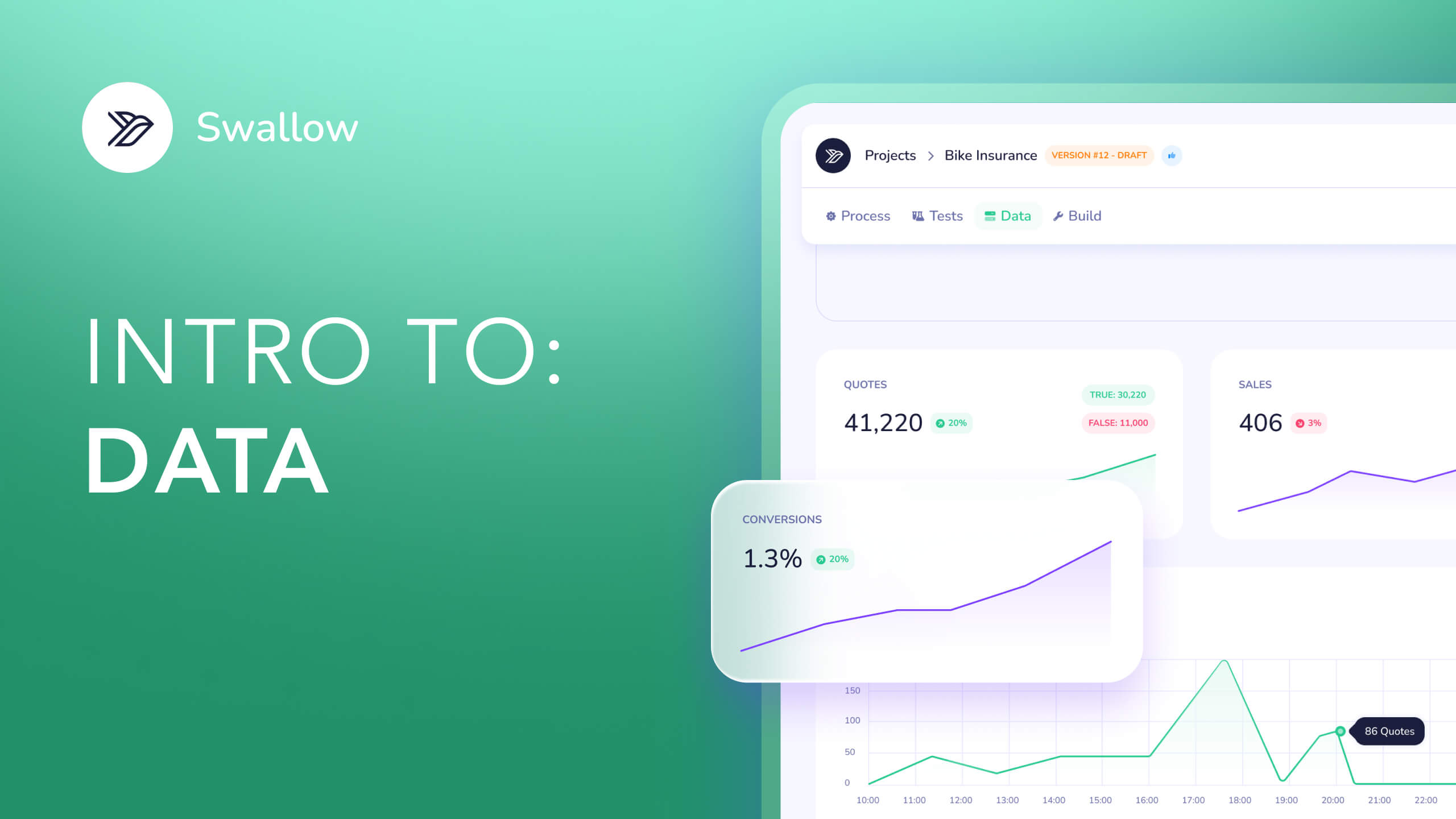
Swallow Data: Live insight into your pricing performance

See how Swallow’s Data area gives you real-time visibility over quotes, performance, and customer behaviour across your entire pricing model

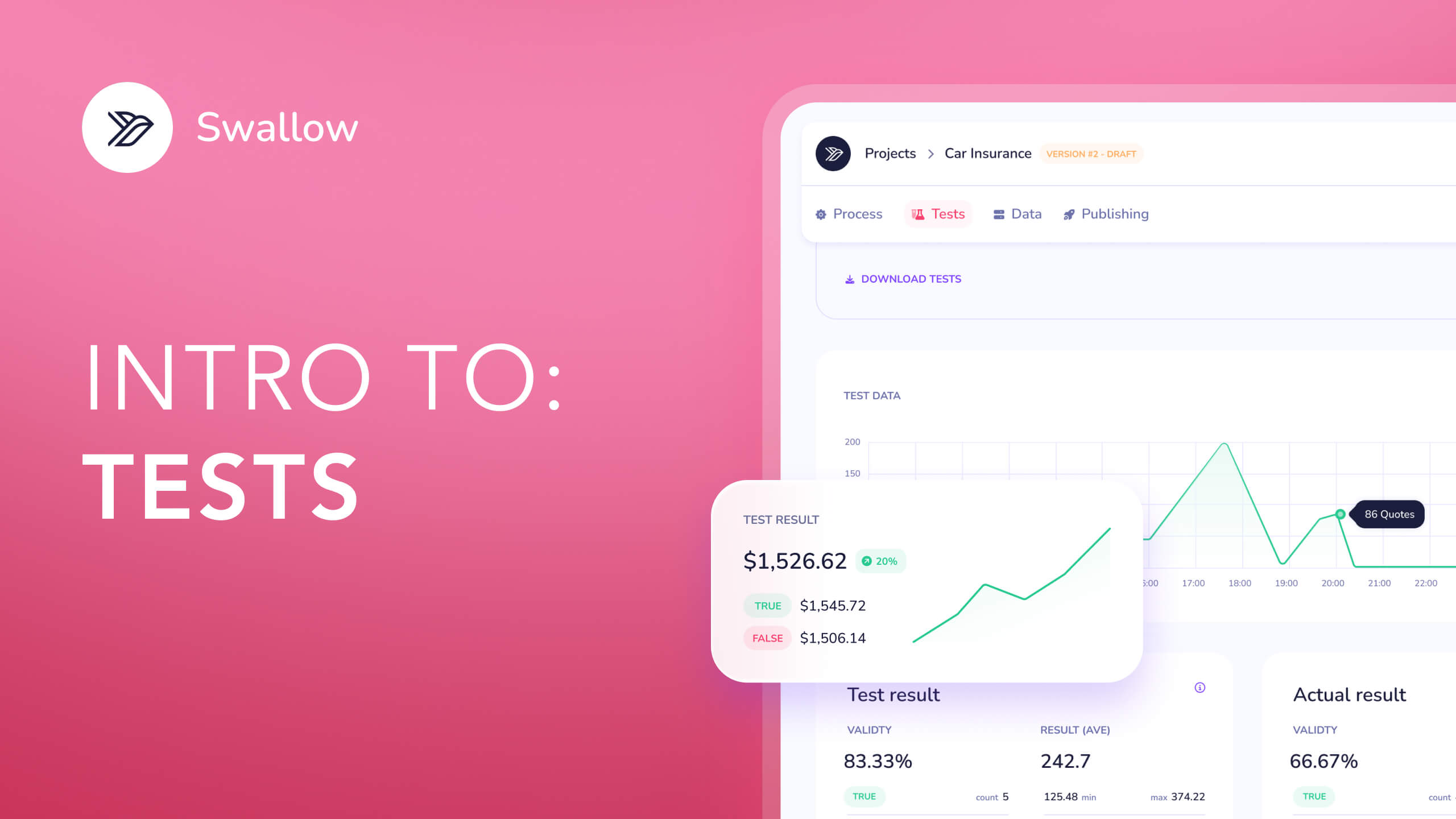
Swallow Tests: Validate your pricing with real-world scenarios

See how Swallow’s Tests area lets you simulate quotes, inspect calculations, and perfect your pricing model before publishing

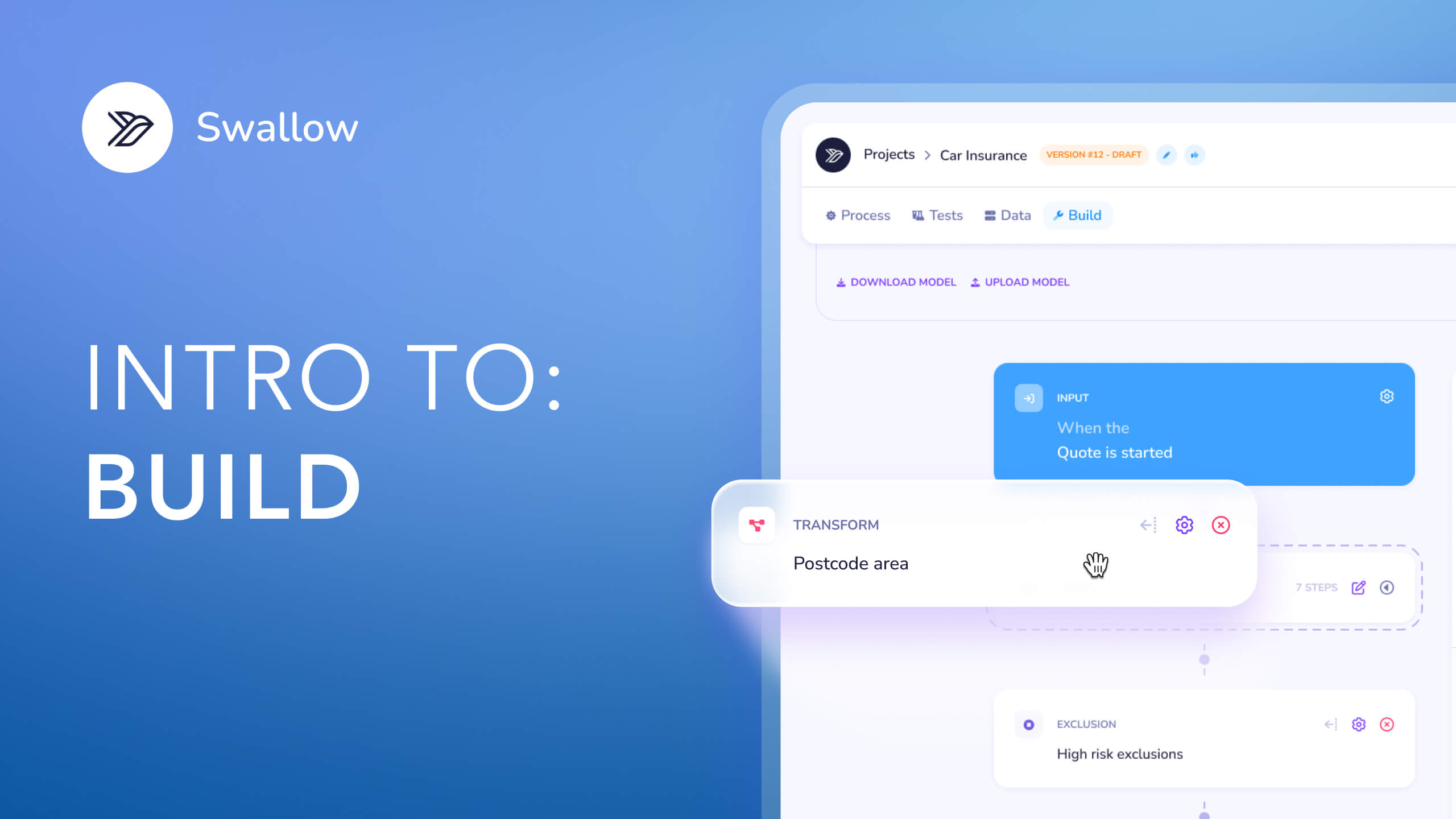
Swallow Build: Bring your pricing model to life

A quick look at how Swallow’s Build area lets you edit, test, and publish pricing models with complete control and instant feedback

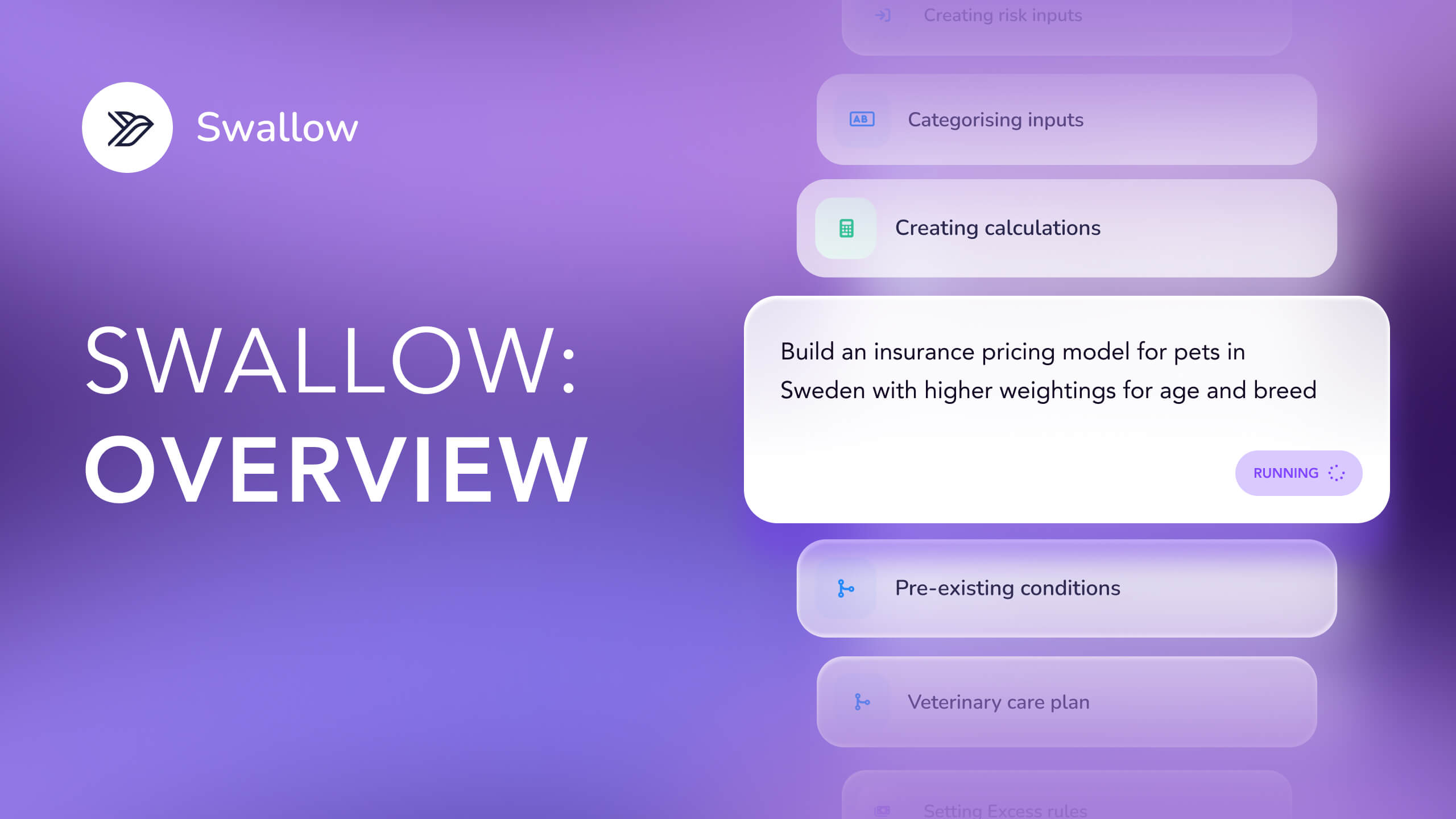
Swallow Overview: Core features at a glance

See how the AI actuary inside Swallow turns a simple prompt into a fully tested and deployable insurance pricing model for electric vehicles in just a few clicks

Why Modern Insurers Are Moving to AI-Powered Enterprise Pricing Engines

A look at how AI is transforming insurance pricing, from spreadsheet-based models to enterprise-grade rating engines built for speed, consistency, and control

Swallow / MGT

How MGT use Swallow to power AI-driven pricing, accelerate model updates and support fast, reliable commercial insurance quoting.

AI Agent for Insurance Products

Sam talks through our new AI Agent for Insurance products. Get a new Insurance product built and live within a couple of minutes.

Swallow / Ouch!

How Ouch! used Swallow to launch digital takaful products faster, with transparent pricing, audit readiness and seamless model updates.

Pricing Pain Point #4 - Slow deployment

Whilst the modelling process is where pricing strategy begins, getting changes in front of customers is where the rubber hits the road and new pricing is tested with real customers. Moving quickly to make changes to live pricing offers pricing teams an opportunity to respond to the market, test and iterate, and roll out new products.

Pricing Pain Point #3 - Testing concerns

With pricing critical to growth and profitability, businesses must understand the impact of any price changes, as well as ensure what goes live to customers is identical to that modelled. With pricing driven by complex financial models, this is particularly true - a percentage point error in the code deployed could easily lead to a significant financial impact.

Swallow / Open

How Open used Swallow to launch embedded insurance in the UK faster, with flexible pricing, rapid updates and lower operational cost.

Pricing Pain Point #2 - Lengthy process

In any fast moving business, having a clear record of decisions, changes and their impacts is key to operating efficiently and successfully. For regulated industries, a clear governance process is a requirement and critical to ensuring compliance with local regulations.

Pricing Pain Point #1 - Data issues

Underlying all pricing strategy is data, whether it be on the market and competition or a company’s own quote, sales and cost data. Collecting this data and using it to inform future pricing decisions is one of a pricing team’s key objectives.

Swallow / Rivr

How Rivr uses Swallow to deliver pricing models faster, with better governance, smoother client handovers and one-click deployment.

What we've learned about pricing

Over the past few months, we've talked to over 100 pricing and technology professionals from a range of industries. From our conversations, many pricing pain points have emerged, helping us to better understand the challenges businesses face and inform the direction of our platform.

Why I created Swallow

Financial pricing models (think insurance, credit, mortgages, financing, leasing, memberships) have, and continue to be, designed in spreadsheets and published through in-house custom code or legacy enterprise software. Pricing changes can take weeks instead of hours.

We feel you, pricing is hard...

Dynamic pricing is hard to create and serve to your customers. Because it is hard, it can become a technical concern rather than a business concern. Here be where the dragons lie.